
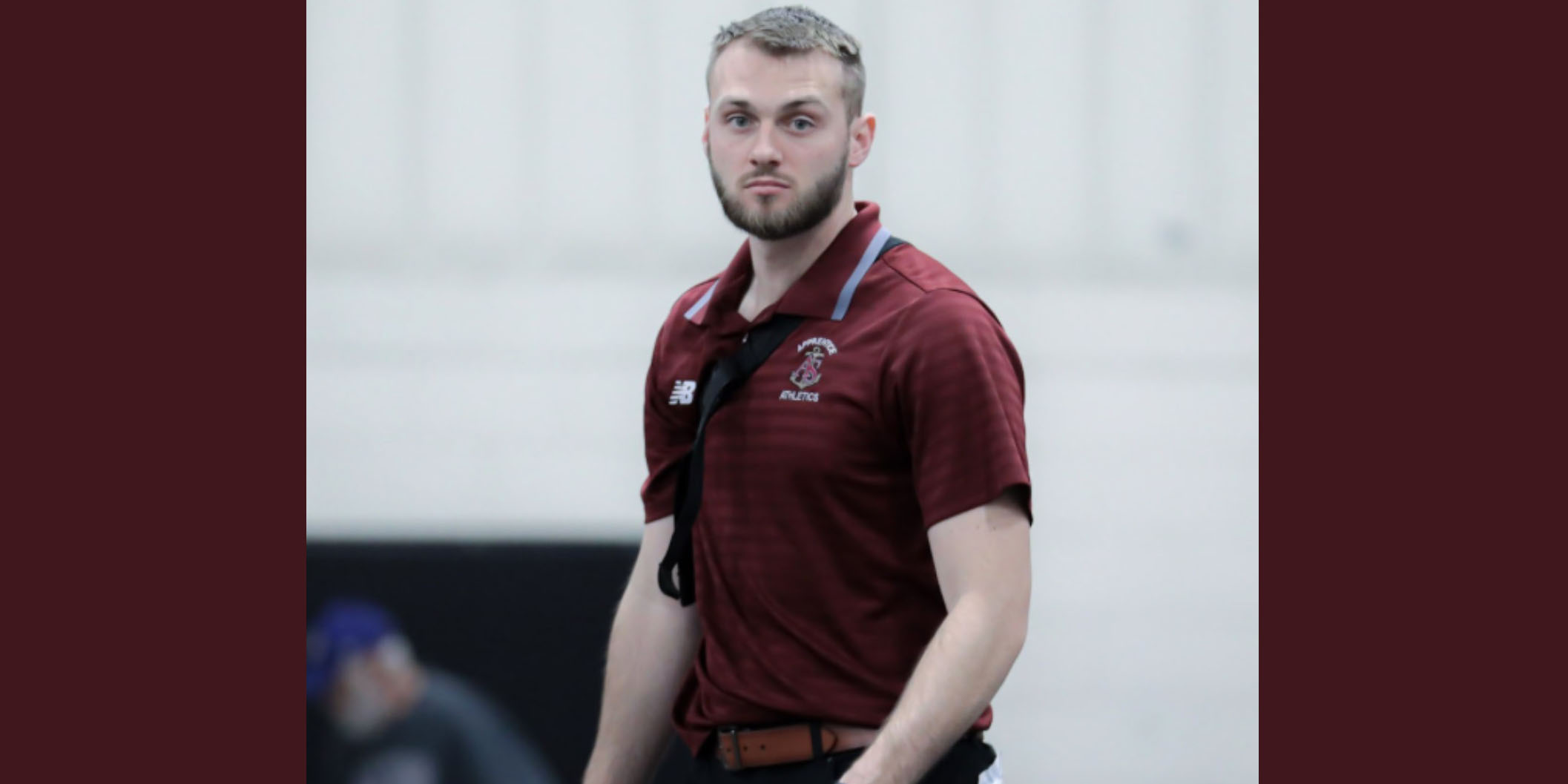
 Athletic Trainer Tyler Killenbeck ensures the health and wellbeing of apprentice athletes.
 Athletic Trainers Keep Apprentices in Shipbuilding Shape
Published March 25, 2026
Newport News Shipbuilding’s Apprentice School is the home of many fine athletes who compete at the national level, in addition to maintaining a full workload and class schedule.
Behind these athletes is a small team of athletic trainers – licensed health care professionals who prevent, diagnose and treat injuries and medical conditions. Athletic trainers provide care in schools, colleges, workplaces, clinics and professional sports. They are trained in injury prevention, emergency care and rehabilitation.
March is National Athletic Training Month, and this year’s theme is “Care You Can Count On.”
With the ever-increasing need for U.S. Navy ships, The Apprentice School athletes know that they can count on their athletic trainers to help mitigate and treat injuries associated with collegiate athletics.
Tyler Killenbeck is one of the contracted athletic trainers who works with The Apprentice School under Sean Hanrahan (O22).
“We help the school with medical coverage for games, practices, and for off-season workouts,” Killenbeck explained.
Once a Division 3 soccer player, Killenbeck faced a series of injuries that placed him in the care of athletic trainers. Rather than letting his injuries stop his athletic career, he pivoted.
“Going through the rehab process, I took a liking to athletic training,” he said. “I always wanted to be involved in kinesiology, exercise and sports science – that’s what I was studying for my bachelor’s degree. I took an internship doing athletic training at the Division 1 level and fell in love with it.”
His love for his work comes from helping athletes get back to being at their full strength and capabilities for their sport. Additionally, Killenbeck is the son of a sailor, fueling his drive to care for apprentices.
“These athletes have a responsibility in building the Navy’s ships, making them battle ready and filling out other contracts. This also means they don’t follow a typical Division 3 schedule, which includes three or four hours of classes and a two-hour practice. Instead, they have a consistent 12 to 14-hour day between work and practice, on top of their course work.”
Because of this unique challenge, Killenbeck says he has a simple charge as an Apprentice School athletic trainer.
“It is my job to help apprentice athletes in their careers as they move through their apprenticeship. I have to make sure they are healthy enough to both do their work and execute their sport.”